How it changed
The stages that made the island what you see now
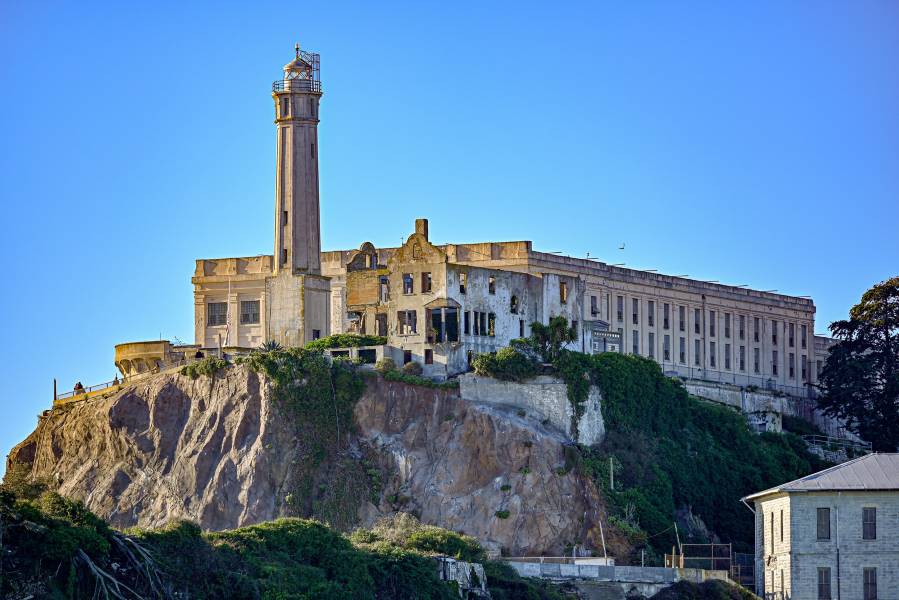
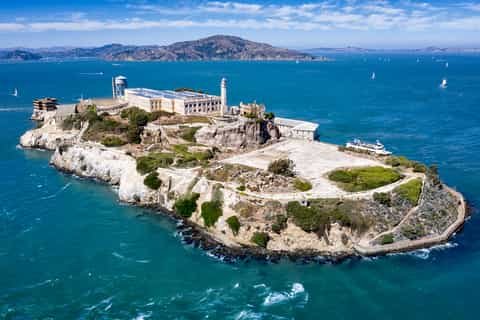
Alcatraz was never one clean project. It shifted from fort to prison to historic site, and each change left a visible trace in the buildings and landscape.
01
1854–1861
Lighthouse and harbor defense
The first modern phase combined a lighthouse and military fortification. Federal authorities used the island’s height and isolation to control the bay entrance, which is why the island feels defensive before it feels domestic.
What remains
The lighthouse and the island’s steep, strategic profile still explain its first purpose.
02
1850s–1907
Military prison use
By the 1850s the island was already holding prisoners. That use deepened through the Civil War era and culminated in the 1907 designation as Pacific Branch, U.S. Military Prison.
Important distinction
The federal prison came later. The island was already a place of confinement before 1934.
03
1912
The current Cellhouse was completed
The prison complex that visitors now enter was finished in 1912. Its 600 single cells made the institution more formal and more controlled than the earlier military use.
What to notice
The Cellhouse is a later shell built onto an older island logic of control.
04
1934–1963
Federal penitentiary years
Alcatraz became a federal penitentiary in 1934 and operated for 29 years. More than 1,500 people were incarcerated there, including prisoners considered difficult to manage or likely to escape.
Visitor takeaway
The famous prison image comes from this period, but it sits inside a much longer island history.
05
1969–1971
Native American occupation
From 20 November 1969 to 11 June 1971, Indians of All Tribes occupied Alcatraz. The occupation lasted about 19 months and became part of the Red Power movement.
What to notice
This history is not a side note. It is one of the island’s main meanings.
06
1963–1973
Prison closure and public opening
The federal prison ended in 1963, and the island later entered public interpretation within Golden Gate National Recreation Area. That shift turned a working prison landscape into a place for memory and interpretation.
What remains
The buildings survive because the site was kept, not replaced. Preservation made the old prison readable.
07
Today
Heritage site and wildlife place
Alcatraz is now a National Historic Landmark and an important bird habitat. Parts of the island can close seasonally for nesting seabirds, so the landscape is still managed, not frozen.
Visitor takeaway
You are visiting both a historic site and a living island.